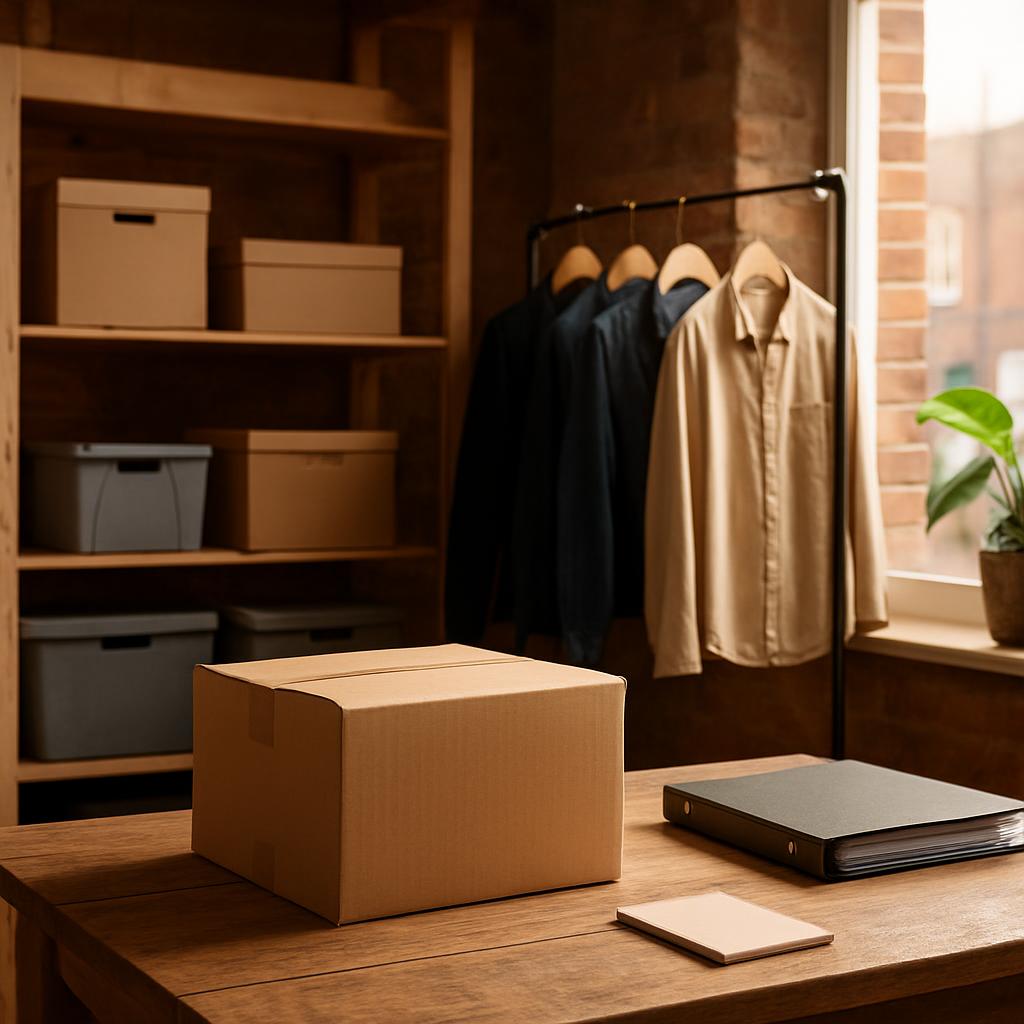
What South Shields Businesses Do with Storage Space
Find Out More →Walk past the Port of South Shields on any given day and you'll notice something: businesses around here don't just rent storage space and throw things in. They treat it like a working part of their operation. They're deliberate about what goes in, how it's organized, and when they actually need to access it. Most homeowners, by contrast, rent a unit and hope for the best.
That difference matters. And it's worth paying attention to, because the approach local businesses take to self storage is surprisingly practical—and most of it translates directly to your spare bedroom, loft, or the pile of boxes gathering dust in your garage.
Why businesses think differently about storage
Local South Shields businesses treat storage as an extension of their space planning, not an afterthought. They know exactly what's in there, why it's there, and when they'll need it again. It's not sentimental. It's not 'just in case.' It's functional.
The difference comes down to cost. For a business, every pound spent on storage is coming out of the budget. That forces clarity. You don't pay monthly rent on something you've forgotten about. You don't store items you might use 'someday.' And you certainly don't waste space by piling things in without a system.
Homeowners often approach storage the opposite way. Because it feels less painful to rent a unit than to make hard decisions about what stays and what goes, we end up with storage that's expensive, disorganized, and full of things we never actually need. We're paying for the privilege of not deciding.
How to organize like a business does
This is where the real lesson sits. Businesses that use self storage in South Shields follow a simple system: inventory, categorize, and label. Everything that goes into their unit gets documented. Not obsessively—just enough that they know what's there and where to find it when they need it.
For your own storage, the same logic applies. Before you rent anything, write down what's actually going in. Be specific. Don't just say 'kitchen stuff'—say 'dinner service for 12, three mixing bowls, cake tins.' Take photos if you're storing items long-term. Label boxes clearly on multiple sides. Use a simple spreadsheet or notebook to track what's in there.
It sounds basic because it is. But it transforms the entire experience. You'll spend less time hunting for things. You'll know immediately whether you actually need something or can let it go. And when it comes time to retrieve items—whether that's after a house move or before the winter season—you'll know exactly what's waiting for you.
Learn more here about how proper organization saves money and stress.
The cost question: what are you really paying for?
Businesses measure storage cost against real value. They ask: is this worth the monthly rent, or should we handle this differently? The honest answer is that self storage only makes sense if you're actually using the space for something that couldn't be solved another way.
For most homeowners, that means seasonal items, moving house, or clearing space while you decide what to do with something. It doesn't usually mean paying monthly rent indefinitely for items you've genuinely forgotten about. If you can't remember what's in there after three months, you're probably paying for storage you don't need.
That said, if you've got a genuine use case—you're between homes, you've inherited items, you need space for a kitchen renovation—then self storage genuinely solves a problem. The cost is worth it because the alternative (keeping it all at home, or throwing things away you might need) costs more in other ways.
This guide explains how to calculate whether storage is actually right for your situation.
Access and timing: knowing what you actually need
Here's another thing businesses get right: they think carefully about access frequency. If something needs to come out every week, it doesn't belong in self storage—it belongs at home or in your office. If it comes out twice a year or less, storage might make sense.
This matters for South Shields residents in particular, given the seasonal changes we get. Winter supplies, garden furniture, holiday decorations—these are genuine candidates for storage because you know you'll need them at specific times. Boxing up your summer clothes in November and retrieving them in April? That works. Renting a unit for things you never actually retrieve? That doesn't.
Before you commit to any contract, ask yourself honestly: how often will I need this? If the answer is 'probably never,' trust that instinct. If it's 'a few times a year,' then you've got a real use case.
Read more here about matching your storage choice to your actual habits.
Making the move to smart storage
The businesses using self storage around South Shields have figured out that storage isn't about cramming things into a box and hoping. It's about solving a specific problem with intention. You know what's in there. You know why. You know when you'll need it. And you know what it costs.
That's the framework worth borrowing. Whether you're storing items for three months or three years, treat it with the same care a business would. Be deliberate. Be organized. Be honest about what you're actually paying for.
If you've decided self storage is the right fit for your needs, Self Storage South Shields is ready to help. We've worked with plenty of local households and understand what works for South Shields residents specifically. Get in touch and let's find the right unit for what you need to store.
Looking for Self Storage near South Shields?
We have secure, flexible units available in the area. Get in touch with Self Storage South Shields today.
Find Out More →