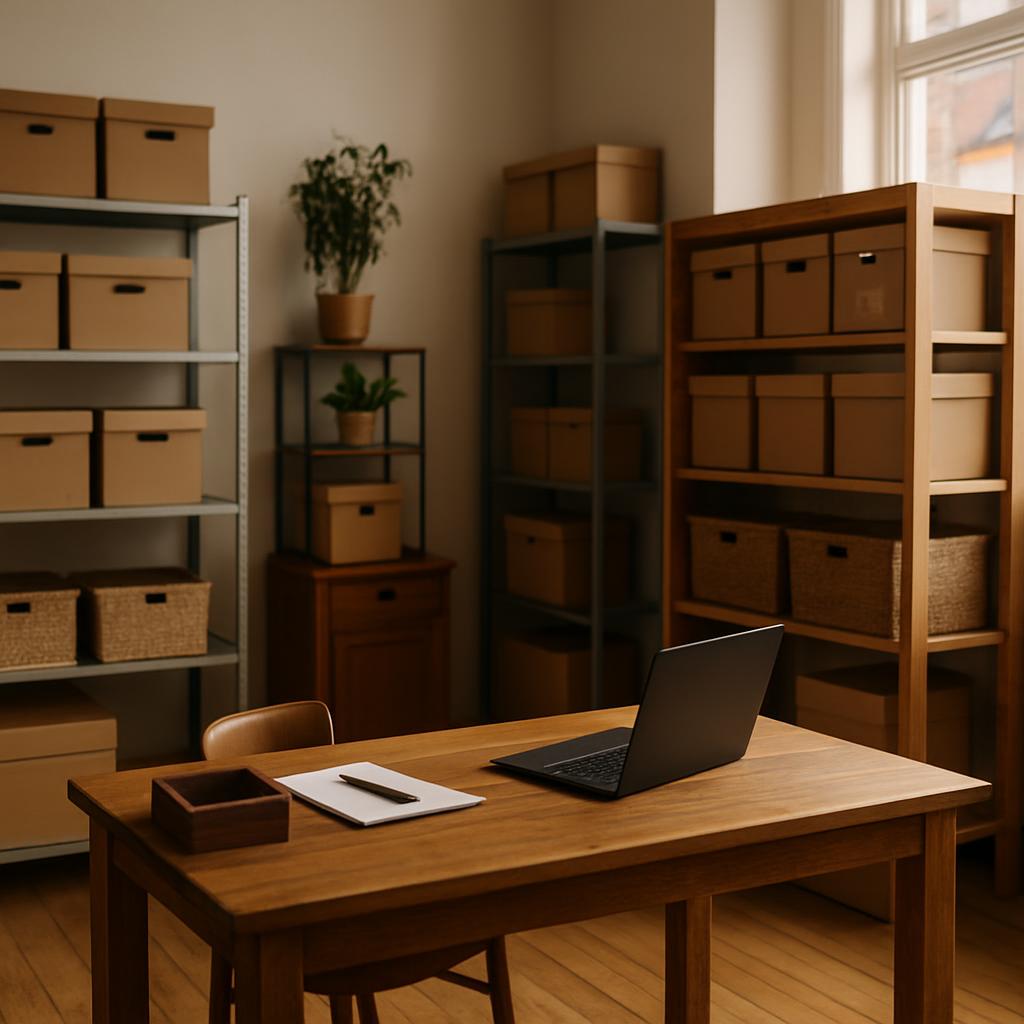
How South Shields Businesses Beat Storage Chaos
Find Out More →Walk into any thriving business around South Shields and you'll notice something: they're not drowning in paperwork, old stock, or seasonal kit cluttering up their workspace. That's not accident. It's systems.
Homeowners often treat storage as a last resort—a place to dump things when the spare room gets full. But local businesses here treat it completely differently. They're strategic about what goes into storage, how they organize it, and when to rotate things back out. And honestly, that mindset works just as well for households.
If you've ever tried to find something you stored three years ago, or ended up paying for space you weren't actually using, you're doing what most people do. What you're not doing is thinking like a business does.
Why businesses get storage right from day one
Here's the thing: businesses can't afford to waste money on storage they don't need. Every pound counts. So they plan. They measure. They actually know what's going in before they rent the unit.
Port operations around South Shields, retail operations at the Crown Centre, even smaller outfits running seasonal stock—they all treat storage as an extension of their workspace, not a dustbin. They have a reason for everything in there. They know how long it'll stay. They keep an inventory.
For homeowners, this translates to one thing: before you book a unit, ask yourself hard questions. Are you storing something you're actually going to use again, or something you feel guilty throwing away? Will you need it in six months or six years? Can you afford to keep paying for that space indefinitely?
This is the difference between storage that works and storage that quietly costs you money every month while you forget what's inside.
The inventory system that changes everything
Businesses keep meticulous records. They label boxes. They take photos. They know exactly what's on which shelf and when they last checked it.
Most homeowners don't. They shove things into a unit and hope they remember where stuff is when they need it. Then they pay for another month because they can't face going back to look.
Creating a simple inventory—even just a spreadsheet or phone notes—sounds tedious, but it's the single thing that stops storage from becoming a money sink. Read more here about how local businesses keep their systems organized, because the principle is exactly the same whether you're storing retail stock or family belongings.
Label everything clearly. Take photos of boxes before they go in. Write down what you're storing and when. It takes an hour up front and saves you months of confusion and unnecessary fees.
Rotation: the thing most homeowners forget
Businesses don't store things permanently. They rotate. Seasonal stock comes in and out. Old paperwork gets archived and eventually destroyed. Tools get used, returned, replaced.
For households, this means actually having an end date for your storage. You're not storing to hoard—you're storing to bridge a gap. Moving house? Store for three months, not three years. Renovation happening? Storage while work's ongoing, then everything back out.
If you're paying for a unit and haven't opened it in twelve months, something's wrong. Either the stuff inside doesn't matter anymore, or you're avoiding making a decision about it. This guide explains the different ways people use storage—and how to make sure you're not just extending the life of clutter you don't need.
The businesses around here that store most efficiently are the ones treating it as temporary. When your storage arrangement starts feeling permanent, that's when costs creep up and usefulness drops to zero.
Choosing the right size (and sticking to it)
Businesses hire exactly the space they need. They might add a bit of buffer room, but they don't rent a huge unit and hope to fill it somehow. That's backwards.
You should do the same. Measure your stuff. Know what's going in. Pick a unit size that fits—not one that's "probably big enough." Smaller units cost less. They also keep you honest. When you run out of space, you make decisions about what stays and what goes, instead of just abandoning a half-full 50-square-foot tomb.
This is especially useful in a place like South Shields where homes can be tight on space already. As we covered, understanding exactly what you need before you commit is half the battle.
The real lesson
Businesses treat storage as a tool, not a solution. They use it to solve a real problem for a real amount of time, then they close the door on it. They track what's inside. They know it's costing them money, so they make sure that money's being spent on things that matter.
If you're thinking about self storage in South Shields—whether it's for a move, a declutter, or a renovation—start thinking like a business owner does. Be intentional. Plan ahead. Keep records. Set an end date. Pick the right size.
Self Storage South Shields can give you the space, but you need to give it the strategy. Get in touch to find a unit that fits what you actually need, and let's make sure your storage works for you instead of against your wallet.
Looking for Self Storage near South Shields?
We have secure, flexible units available in the area. Get in touch with Self Storage South Shields today.
Find Out More →